‘The Whole Sky All Diamonds’ Asks You to Clock In. Will You?
Some of the most popular immersive theatrical experiences have plunged audiences into the final days of the Romanov reign, transported them through the halls of the Opera Populaire, and led them through secret passages of a 1930s hotel. Playwright Bixby Elliot wants to immerse his audiences in a less exotic experience — a corporate 9-to-5.
His latest work, The Whole Sky All Diamonds, takes place at the height of the tech startup boom and asks his audiences to onboard at Füfl, the next company to change the world. You’ll get to know your new colleagues, and their hopes and dreams for their futures — and maybe you’ll even hit your KPIs, synergize, or contribute to the bottom line. Either way, Elliot and his team will supply the conference rooms and nap pods.
Elliot and I spoke the week before the first performance of The Whole Sky All Diamonds, as the show was loading in and transforming Loft Story in Brooklyn into the Füfl office. He shared his inspiration for the piece, his philosophies on immersive performances, and what it means to trust his cast and crew — many of whom are veterans of immersive theater. Our conversation below has been edited for length and clarity.
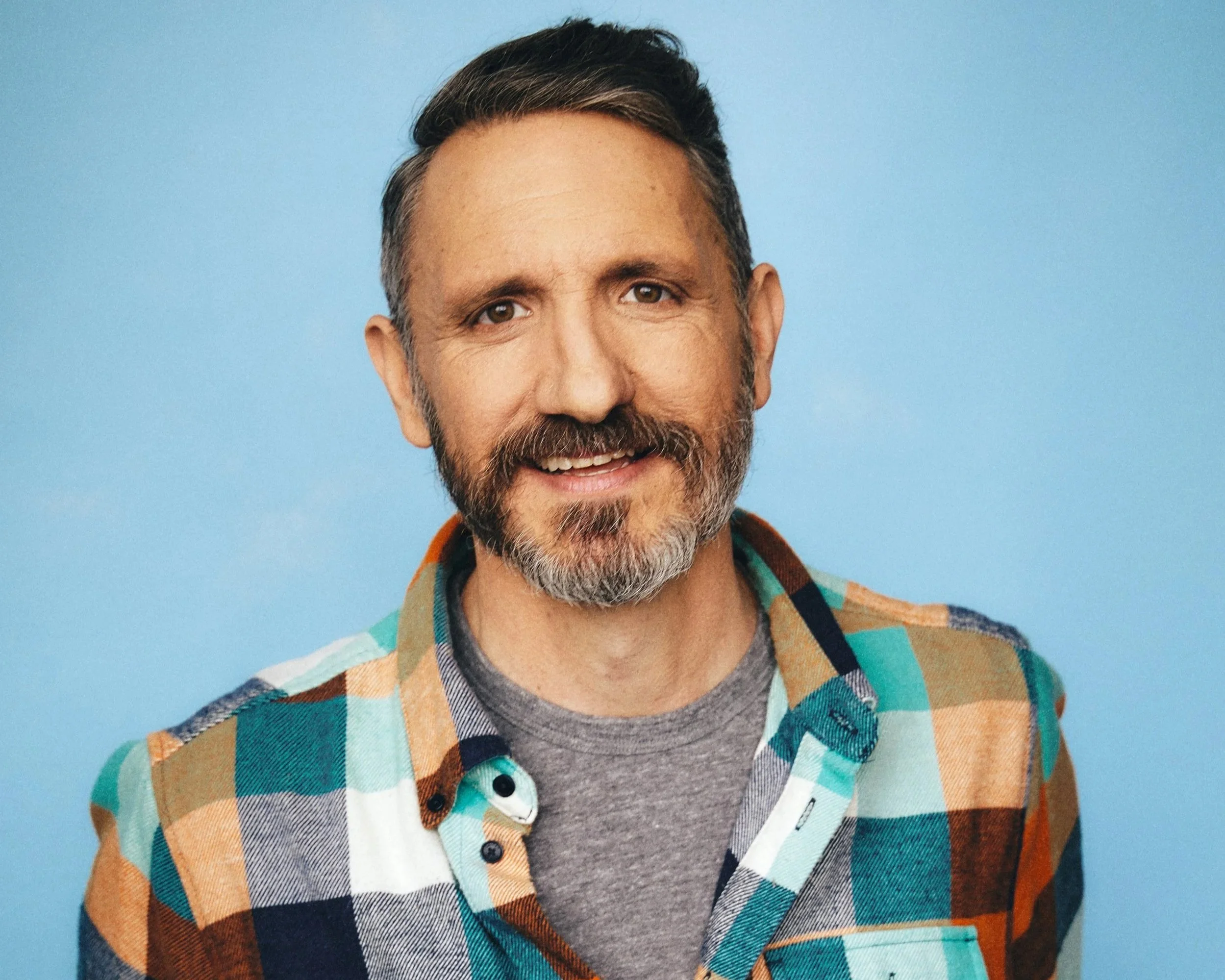
The Whole Sky All Diamonds creator Bixby Elliot.
You’re getting ready for your first performance. You’re loading into the space right now. But let’s start at the beginning. How did you get to this point with The Whole Sky All Diamonds?
Well, it's pretty wild. I wrote a play — like a normal play, beginning to end. And I use it as a script in a directing class that I teach for Carnegie Mellon and Syracuse University. And I bring in a bunch of actors that I know to work with the student directors. Lucy York and Adam Griffith, who are now in this production of this play came in and helped me out.
And then they went and had coffee somewhere one day, and they were talking and they were like, you know what, we should call Bixby and suggest he do this as an immersive theater project.
So they emailed me, we got on a call. A week later, we had another call, and a week after that, we were interviewing directors. Days later, we had a production team in place. We were casting.
That first call happened on May 1st and here we are about to open the show. So that all happened very fast.
You've got this traditional, proscenium-style script already in your hand and now you have to turn it into an immersive experience. What does that process look like?
It's been wild. I’ve never done it before. And it was really fascinating because Lucy, Adam, [director] Jack [Dentinger], [Hope Kay] — who’s one of the producers and the brain behind what happens backstage — and I, we all got together and spent a long time reading the play out loud and talking about the feeds and all that stuff.
We took a Mural board and started mapping out the show. I made a track for each of the six characters in the play and then mapped out exactly where they would be at any point in the play. And then there were all these holes, so I just started plugging holes.
We knew there were moments where all six characters were together and that the audience would see all of that, but we had to figure out how could we give the audience the same emotional beat at the same moment, even if they weren't seeing exactly the same story. What's really fun now is to see the ways in which you won't get a bit of information here, but then you'll come over here and you'll see the second half of something and still understand what happened, because you’ll get the emotional content in another way.
How are you ensuring that audiences are getting from A to B, emotionally or even literally, even though they're seeing different things? How do you get people to a meaningful conclusion, even though they're taking different journeys?
So, there are two main styles of immersive theater. One is “promenade” where the audience all goes through the same thing. Masquerade is a good example of that. And then there are other things like Sleep No More or The Death of Rasputin, where it’s more experiential, and plot really isn't the primary focus, although there is still a sense of story.
The Whole Sky All Diamonds is a mix of both styles. It’s very plot-driven. There's a climax to this play. There are things you're meant to know and learn and experience. And so it is a little bit more important that people get certain pieces of information. So those pieces of information have to get seeded everywhere.
For example, the play takes place in this fictitious tech company called Füfl, and we want everybody to understand what Füfl does and how it works. So everybody's split apart at the beginning and there is this moment in each of the separate scenes where the characters explain what Füfl is and how it works, but you’re getting it filtered through their individual perspectives on their jobs. Some of them hate working at Füfl, so you get this very sarcastic, I hate my job kind of view. One of them is the founder and CEO, so you get a very different perspective, but you have still gotten the key information.
So you're asking audience members to come in and become an employee of this company. What’s your pitch to get someone to be a good little worker bee?
It’s tricky, but we’re hoping it’ll be fun! And we hope to pull back the curtain and take them into that startup world. We’re loading in all the things to transform this office that we've taken over into sort of the Google-ified office. There are nap pods and a conference room that's got fur on the walls.
The story is set in 2014, when tech startups were at their height, so we want it to feel exciting and glamorous, but then we want to pull the rug out from underneath people, because one of the major themes of the play is how we sublimate our dreams through a day job. And so we actually do at one point want people to feel like this job sucks. Like, wait a second, you’ve all fooled me. If we can, we're trying to even trick them into getting sort of carried away with their dreams at the moment of being at the play, and then we’ll remind them that they're at work.
But don't worry, people will not be asked to actually do work.
I want to talk about the title of the play, too. “The Whole Sky All Diamonds” doesn’t exactly scream corporate tech startup. What does that title mean to you in the context of the work?
I often refer to this play as Google meets Chekhov or Google meets Uncle Vanya. And so while it is about tech, and this idea of a tech company going from this utopic, amazing place to work to this really terrible thing, it is also about these people that work there.
It is about heartbreak. It is about betrayal. It is about loss.
And it is very much inspired by Chekhov's Uncle Vanya. And if you see the play, you will definitely see the echoes of Vanya in it. You will see many of the characters as reflections of the characters in Vanya.
And there is a line in Uncle Vanya — and I won't give away the whole line — but it has the phrase, “the whole sky all diamonds” in it. You see the echoes of the tech world in that line, even within the play. And the play has always had that name from the beginning. The second I started writing the play, I knew it was going to have that title, so it's dear to my heart.
Let’s talk about your relationship with your audience. Since this is an immersive piece, your audiences are likely coming in with certain expectations or at least assumptions about what they’ll experience. What is the hardest part of delivering that, or at least overcoming the expectations?
To be honest, I think that's a little bit to be seen. We’re starting with what we call playtest audiences, so we'll have people coming in every night until we open, so we'll have an opportunity to talk to them.
And for me, it’s making sure that they get the full story — that they get the full meal. That they don't feel like they've missed something. I think in immersive theater, you're always going to feel like there's more to do and see, but I don't want them to feel like they don’t know what happened, because we are trying to land a full journey.
You've already mentioned that the show is very plot driven and has to get from A to B. But in those intervening moments, how much freedom are you giving your performers to lead people on journeys?
I think they have a lot of freedom. There is a script, and there are lines — and they do have to learn their lines — but within that, there will always be moments where anything could happen. And then there are sections that are more interactive, and there are quizzes, and tests, and activities, and things like that. So there's quite a lot of variability that's introduced.
I'm finding it so interesting as a playwright, because there's just no way to control it, right? God is laughing in my face every day I go to rehearsal, because it's just like six different tracks, and all of this stuff, and I can't even see some of it. So basically, they can do whatever they want, and screw me, right?
But the actors are incredible. They've been so great about being considerate of the text. And at the same time, they know this form better than I do. Several of them were in Sleep No More and Death of Rasputin, and so they understand this form way better than I do. So they know when they have to ad-lib and when they don’t.
So you mentioned Uncle Vanya being an inspiration for this. Was the other piece of inspiration the fact that you previously worked at Google?
Yes. I worked at Google from 2013 until 2022, so almost a decade, and it was an incredible experience. Actually, the characters in the play are a bit more disgruntled than I ever was, truly.
I was there at an interesting period. In 2013, 2014 the slogan was, “Do cool things that matter.” Everybody wanted to work there. And then slowly over those next nine years, I watched things really, really change. And now, of course, people's relationship to tech has changed immensely. In 2015 or 2016, the slogan became, “Do no evil.” And the change from “do cool things that matter” to “do no evil” felt like a real shift. I think we all felt that working there.
And I was a playwright trying to find myself a life in the arts and do something outside of this job, and I think that tension is where the play comes from. How can I be true to myself and live my dreams inside of what feels like a big, hard job to pay the bills? And I think a lot of people, especially artists, have to contend with that on a daily basis. How do I make sure I can live and pay rent and eat and still do the things I care about?
The Whole Sky All Diamonds runs August 11 through August 22 at Loft Story.